
How to Check for a Warrant in Clarke County
Clarke County publishes no online warrant list. The practical starting point is Iowa Courts Online, a public case index rather than a live warrant database. Pull up a case and read the whole docket. Treat any warrant entry as a lead, not an answer, and confirm it with the Clarke County Clerk of Court or the serving agency. Search with only the identifiers you need. Give private details straight to the official office. A name-only match can point to a different person, and a blank result can mean delay, an old case, a spelling slip, or a confidential file. Neither outcome settles the question. A careful Clarke County warrant check always runs through more than one channel.
- Gather the legal name, county, approximate filing year, and any case or citation number.
- Search Iowa Courts Online by name, exact date of birth, case ID, or citation number.
- Read later events for an appearance, order, recall, service, disposition, or payment.
- Call the Clerk at (641) 342-6096 for the court-record route.
- Ask the Sheriff at (641) 342-2914 about sheriff-held or execution records.
- Speak with counsel before surrender, bond, or a motion meant to address a warrant.
Iowa Courts Online Is Not a Clarke County Warrant List
Iowa Courts Online shows what a public case file holds: charges, events, dispositions, costs, and some financial entries. There is no Clarke County active-warrant button. Bonds and service returns may sit behind a paid subscription. Courthouse public terminals can open documents in public trial cases. Juvenile, sealed, and confidential matters stay out of the ordinary public view. A new case may take one business day to appear, and a citation can take 10 to 14 days, longer near weekends and holidays. Older cases may be missing from the modern system. Those limits make confirmation with the Clerk or the serving agency essential for any Clarke County warrant question.
| Route | Input | Limit |
|---|---|---|
| Name | At least two last-name letters | Spelling and name order matter |
| Date of birth | Exact DOB plus names | No wildcard for required names |
| Case ID | County, type, 17-character ID | Capital letters and 0/O must match |
| Citation | Ticket number | Entry can take 10 to 14 days |
Types of Warrants in Clarke County
Clarke County sits inside Iowa's unified District Court system. A magistrate, district associate judge, or district judge acts according to the case and its stage. The docket or signed order controls. A citation is not a warrant, though willful failure to appear can lead to arrest-warrant process under chapter 805.
| Process | How it arises | Distinction |
|---|---|---|
| Arrest warrant | Probable cause or other statutory grounds | Directs a peace officer to arrest |
| Bench or FTA warrant | Failure to appear or follow an order | Exact docket label must be checked |
| Search warrant | A judicial officer authorizes a search | Does not itself order an arrest |
| Federal warrant | Federal process | County search is not a full federal check |
Other states say “capias” and “capias pro fine.” Clarke County papers use arrest-warrant, failure-to-appear, and court-debt terms, so confirm the Iowa label with the Clerk.
Two Clarke County Buildings Have Different Warrant Roles
Clarke County splits its warrant work between two buildings. The courthouse at 100 South Main Street in Osceola holds the Clerk of Court, who keeps the District Court docket and public case access. The Law Enforcement Center at 220 Townline Road houses the Sheriff and Osceola Police, along with agency records, service, custody, and enforcement. One call will not reach the other's files. The official county contact page lays out how the offices are divided. Use it for routing, not as a warrant lookup.
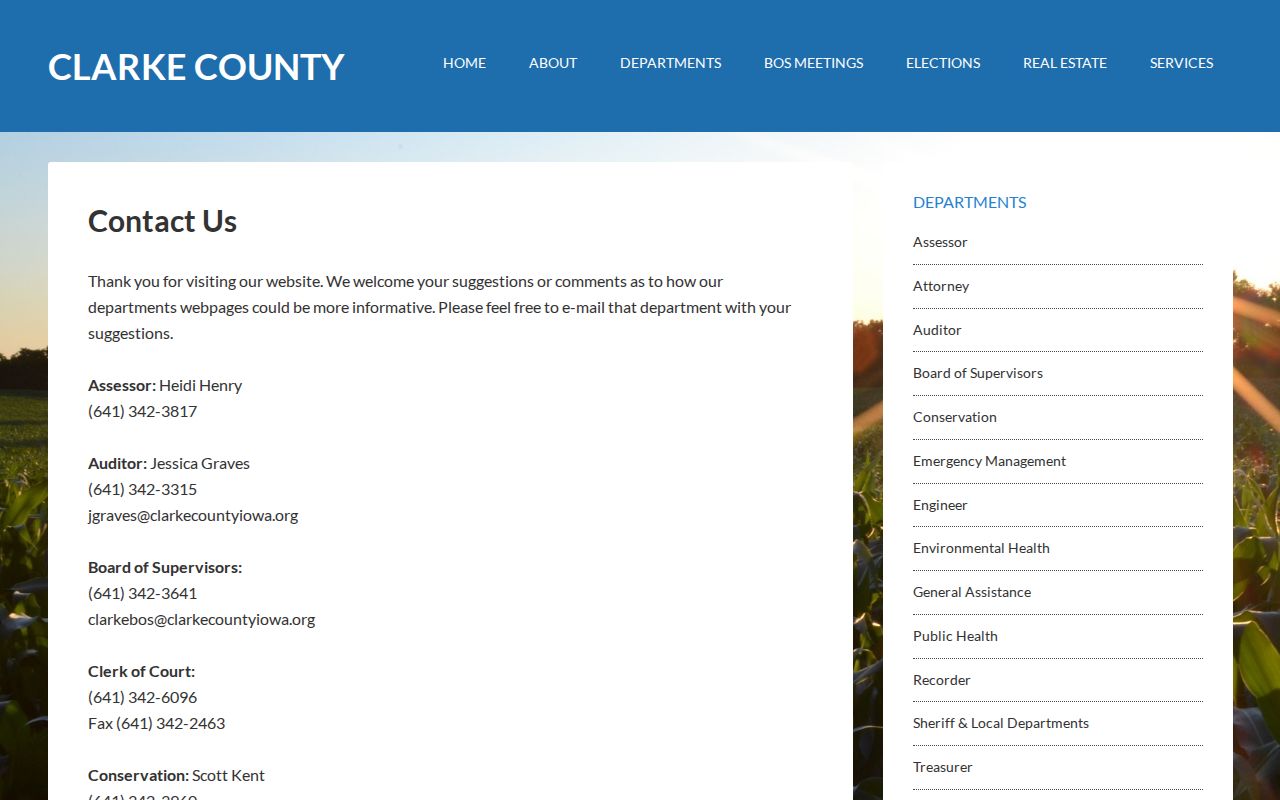
Ask the Clerk for orders, docket events, and filings. Ask the Sheriff for that agency's records. The Recorder keeps land, vital, military, and recorded documents, so a Clarke County criminal warrant never lands there despite the name.
What a Clarke County Warrant Record Shows
A public docket can point to the right case without showing the warrant or its current status. Iowa Code §804.2 spells out the contents: a name or identifying description, the offense, the issuance date and place, and the magistrate's signature and office. The docket adds filings, events, appearances, costs, and financial details. It may still leave enforcement open.
| Case identifier | A 17-character ID, such as CLCL0000000000000, copied exactly; this is only a format example. |
|---|---|
| Person | Name or description in the court record, subject to access rules. |
| Offense | The charge or general description tied to the process. |
| Authority | The judicial officer and District Court context. |
| Bond | Only the amount or conditions in a current order or schedule. |
| Status clues | Appearance, return, recall, quash, disposition, or later event. |
An old warrant entry proves nothing about active status. A payment or a new court date does not mean every law-enforcement system has caught up, so confirm with the office holding the Clarke County record.
Clarke County Case Codes Narrow a Warrant Search
Case codes keep criminal and traffic files apart from unrelated records. The official help list gives CR for criminal, FE for felony, AG for aggravated misdemeanor, SR for serious misdemeanor, SM for simple misdemeanor, ST for scheduled traffic, NT for non-scheduled traffic, OW for operating while intoxicated, and SW for search warrant. Those are case groups. They are not a status glossary. Use them to narrow a Clarke County warrant search.
- CR, FE, AG, SR, SM
- Criminal groupings used to locate a public case entry.
- ST and NT
- Traffic routes used with county and case details.
- OW
- The operating-while-intoxicated case designation.
- SW
- A search-warrant type whose visibility depends on access rules.
The wrong case type or county hides valid results. The Clarke County Clerk can point to the right public record but cannot give legal advice.
Who Issues and Serves Clarke County Warrants
A magistrate can issue an arrest warrant once the legal showing is met. District associate and district judges act within assigned jurisdiction. Warrants go to peace officers for statewide service. The Clarke County Sheriff, Osceola Police, Iowa State Patrol, or another authorized agency can execute one.
Clarke County Sheriff’s Office
220 Townline Road
Osceola, IA 50213
(641) 342-2914
Clarke County has no justice court, county court at law, or municipal criminal court. Municipal infractions can route through District Court. City parking stays with a city clerk.
A Clarke County Warrant Request Needs the Right Custodian
Getting Clarke County records starts with picking the right office. A warrant, docket filing, or court order lives with the Clerk. Sheriff policy, service records, and arrest records belong to the Sheriff instead. Before you send anything, nail down the category, the agency, the date range, and a case number if you have one. Say what format you want and ask for a fee estimate up front. Clarke County Resolution 25-146 helps a little here. The first 30 minutes of staff time are free. After that, the county can bill at its applicable rate, and copies run 50 cents per page. Court records follow separate Judicial Branch guidance, where paper, postage, retrieval, review, redaction, supervision, or programming can all add costs. Approve nothing until each custodian quotes you. Chapter 22 exceptions can also shield investigative material, so if a record is withheld, ask for the legal basis and any segregable public part.
What to Do If You Have a Clarke County Warrant
Get the facts straight before you act on a Clarke County warrant. A payment screen, an old docket line, or a caller's word proves nothing about current status. Verify the case number, the court, the charge, and any bond or appearance terms, then talk to counsel or the court about procedure. Your options may include an appearance, a filing by counsel, an arranged surrender, or bond and release terms a judicial officer sets. Clarke County publishes no recall form, surrender sheet, bond-window schedule, or guaranteed walk-in process, so confirm each step with the court itself.
Important: Speak with an attorney and the issuing court before surrender, payment, or travel because public results may not show current enforcement status.
Paying is not the same as clearing. A receipt is not an order recalling a warrant, and a motion is not a signed ruling. After any step, ask the Clarke County Clerk whether the docket shows it and how to confirm the agency's status.
Clarke County Has No Current Warrant Amnesty Route
Clarke County runs no amnesty program, warrant clinic, roundup announcement, or special Sheriff resolution effort. An old Iowa license-reinstatement program is not current relief either. And 2026 legislation bars government entities from sponsoring or joining warrant-resolution clinics, subject to the statute's terms. The normal case process still governs. Verify the file, contact counsel or the court, learn whether an appearance or motion is needed, and confirm the final order. No official source promises that a payment, a phone call, or showing up at an event clears a Clarke County warrant. So test any future amnesty claim against a current Iowa Judicial Branch, county, court, or agency notice. Private offers never replace official confirmation.
Public Access to Clarke County Warrant Records
Iowa Code chapter 22 sets the public-record framework, and court access also follows Judicial Branch policy. But a filed record is not open at every stage. Section 804.29 can restrict warrant applications until arrest and return or initial appearance. Juvenile and sealed matters carry other limits in Clarke County, and investigative reports may fall under §22.7(5).
Key Rules:
Iowa Code chapter 22 sets access, reasonable cost, and exception rules.
Iowa Code §804.29 limits access to applications during named pre-arrest stages.
Iowa Code chapter 232 protects juvenile information.
A restricted Clarke County result only means the public search cannot answer the question. It does not rule out an active warrant.
Fake Calls Are Not Clarke County Warrant Records
In June 2026 the Iowa Judicial Branch warned about calls, texts, and emails that falsely claim a warrant, missed jury duty, or a debt demanding immediate payment. Clarke County agencies do not demand gift cards, prepaid cards, cryptocurrency, or sensitive account data through an unsolicited threat. End the contact. Then reach an official number on your own. Call the Clerk at (641) 342-6096 or the Sheriff at (641) 342-2914. Skip any callback number, link, or account the caller gives you, since a real warrant matter moves through the court, your counsel, and an identified agency. A rushed private payment cannot replace a docket check or an order from the issuing court.
Clarke County Warrant Context Has No Published Caseload
The 2020 Census counted 9,748 Clarke County residents, but population is not a warrant count. No official total of active warrants, clearance rate, or city breakdown exists publicly. Jail bookings, filings, and population cannot fill that gap. An aggregate request can still ask for counts by type, authority, year, and served or recalled status, with a date of extraction and no names. The records office may say a report cannot be produced, charge programming costs, or withhold protected categories.
These numbers show scale and source coverage, not the number of warrants.
Warrant Records by City in Clarke County
The cities with source-backed coverage here are Osceola, Murray, and Woodburn. Iowa runs a unified court system. No Clarke County city should be treated as having its own separate criminal court without an official source saying so. A city citation can still land in District Court, while city parking matters may stay with a clerk.
Osceola Warrant Records
Population 5,415. Police shares the LEC with the Sheriff; court records remain at the courthouse.
Murray Warrant Records
Population 684. City Hall routes city matters; court and Sheriff questions use county offices.
Woodburn Warrant Records
Population 146. No official local police or court warrant page was located.
The official courthouse history places the current 1956 building in downtown Osceola.
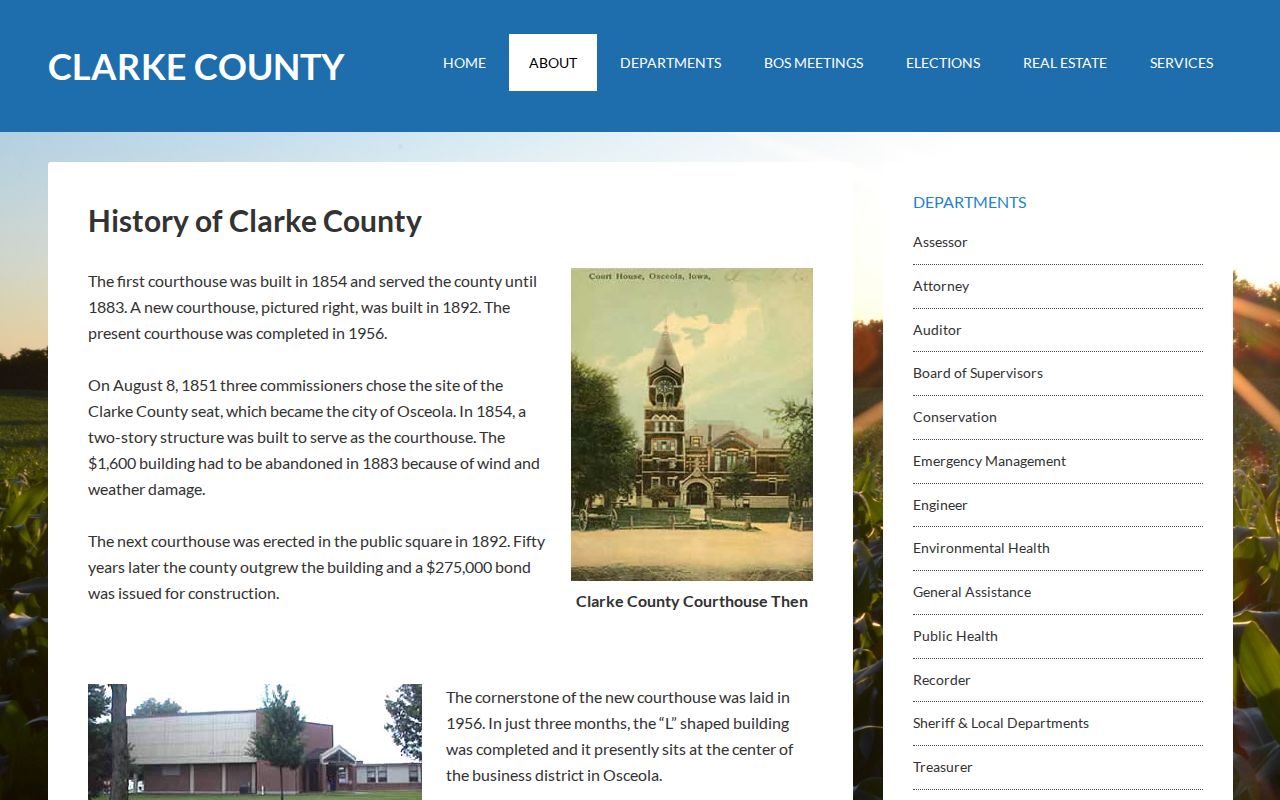
Knowing the history keeps two Clarke County buildings straight: the courthouse and the Law Enforcement Center serve residents of all three cities.
Defining a Clarke County Active Warrant Count
Before any warrant count means anything, ask what "active" covers in that system. Does it mean issued and not served, or simply open in the database that day? A recalled or quashed warrant is not the same as a served one. Clarke County reports can differ depending on who keeps them. The Clerk builds counts from docket events. The Sheriff works from operational entries. Ask which court or agency system supplied the number, when the data was pulled, and whether city, state, or federal process was left out. Also ask whether duplicate entries, old cases, sealed matters, and warrants from other counties are counted. Those limits tell you what a figure measures. They also make reports from different dates or custodians easier to compare. One more caution applies here. The restricted IOWA System is not a public source, so its numbers never reach a public count. No office in Clarke County publishes a defined warrant total. Adding up public case results will not fill that gap, because search delays, restricted cases, later orders, and indexing differences all distort the math. A count also proves nothing about any person named in it. Request definitions rather than names, and seek the figure itself rather than a list for republication. A focused Chapter 22 request, or a court-record request, is the practical way to get Clarke County to state a count with its terms attached.