
Traffic Warrants in Clarke County
Traffic matters in Clarke County run through Iowa's unified District Court, not a separate justice-of-the-peace or municipal criminal court. Iowa Code section 805.5 provides a warrant process for willful failure to appear on a citation. The exact case facts matter. A late payment or data-entry delay should not be called a warrant without a court event.
The official Traffic Citations FAQ says a fine is due on or before the court date. Some tickets require an appearance and cannot be handled as a routine online payment. The citation number, county, case type, and court date are the best starting facts. Keep them private and use them only with official court routes.
Start a Clarke Traffic Warrant Check
Read the ticket before searching. Find the citation number and the appearance or payment date. Iowa Courts Online provides a citation-number search as well as public case searches by name and case ID. A traffic case may use scheduled traffic, non-scheduled traffic, operating while intoxicated, or another court case type.
Quick answer: Use the citation number first, then confirm any FTA or warrant event with the Clarke County Clerk of Court.
A new citation can take up to 10 to 14 days to enter the public system, with more delay possible over weekends or holidays. Do not treat an early no-result screen as proof that the ticket or warrant does not exist. If the stated court date is near, contact the Clerk instead of waiting for the index.
How to Check for a Traffic Warrant
No separate Clarke County citation or traffic-warrant portal was found. The public route combines Iowa Courts Online, the Clerk, and the relevant peace-officer agency. Iowa's IOWA System is restricted to authorized criminal-justice users and is not a public warrant search.
- Search Iowa Courts Online by exact citation number or public case details.
- Review events around the court date for FTA, warrant, appearance, or recall entries.
- Call the Clarke County Clerk at (641) 342-6096 when the index is unclear.
- Inspect public records at the clerk's courthouse terminal if needed.
- Ask the Sheriff at (641) 342-2914 about sheriff-held records or surrender logistics.
The court is the source for the judicial record. A peace-officer agency handles service and custody questions. Neither a public docket nor an informal phone answer should be presented as law-enforcement hit confirmation.
Clarke Traffic Citation Court Rules
The Iowa Judicial Branch Traffic Citations FAQ explains the statewide court route, including the due date and approved payment methods. It is the assigned official source for understanding how a Clarke County citation reaches the court system.
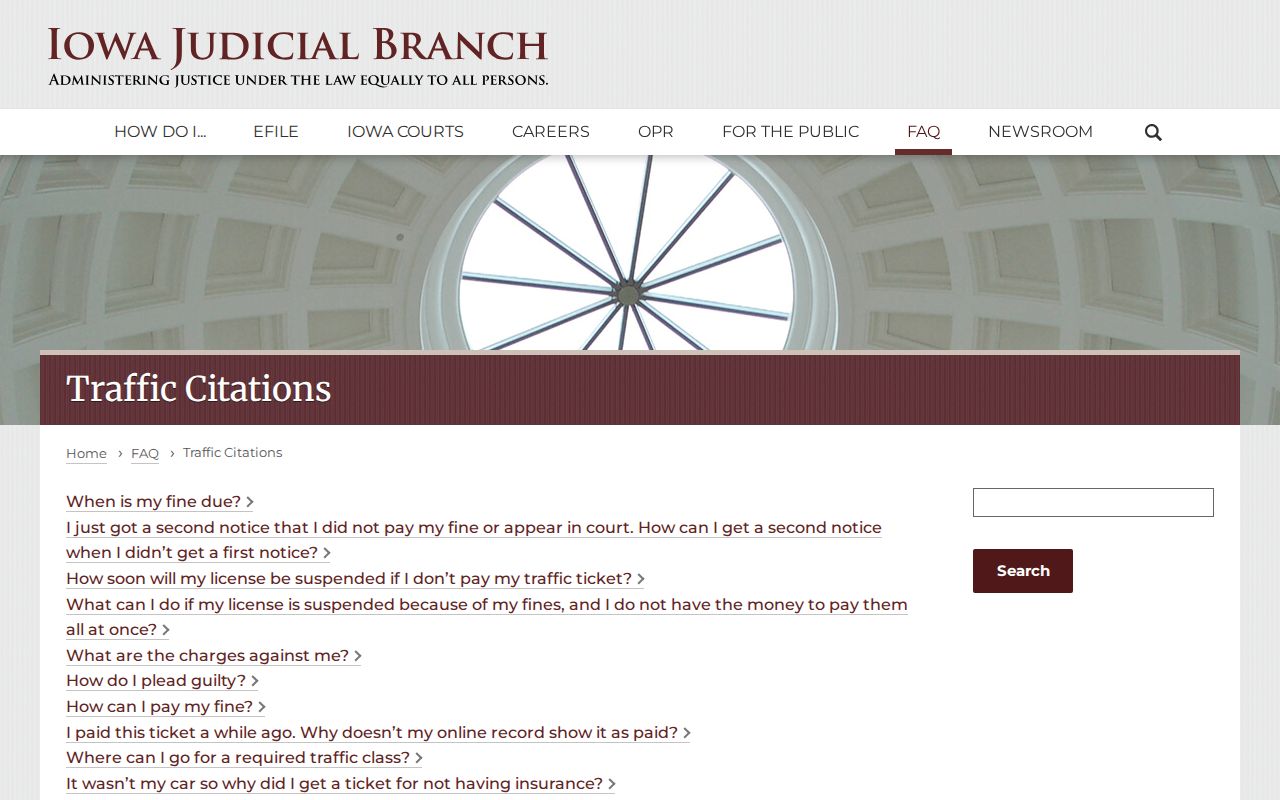
The source distinguishes a routine payable citation from one that requires a court appearance. It does not provide live warrant status. A person who missed the date should use the citation to find the docket and ask the Clerk what later judicial action appears. Court confirmation is essential before paying, appearing, or arranging surrender.
What a Clarke Traffic Warrant Shows
A public traffic record can show the citation, case, charge, dates, events, costs, and disposition. It may not show every warrant document, bond, or service return. Use a generic example such as CITATION NUMBER; Clarke County research did not establish a safe local number pattern.
| Citation or case ID | The official number used to match the ticket and docket |
|---|---|
| County and case type | Clarke plus the court's traffic or criminal category |
| Court date | The required appearance or response date |
| FTA or warrant event | A docket entry that requires later status confirmation |
| Financial record | Fine, costs, obligation, due date, and payment when public |
| Later event | Appearance, recall, quash, service, or disposition when public |
"Paid" and "recalled" describe different events. "Closed" can describe one part of a case while another duty remains. Ask which record and which authority supplied the status.
Clarke Traffic Warrant Payment Portal
The official Pay a Fine page asks for the county, general charge type, and a case or citation number or name. It offers online, mail, clerk-office, and telephone routes for eligible cases. Online payment is available at all hours, while telephone payment uses (515) 348-4788 on weekdays from 8:00 a.m. to 4:30 p.m.
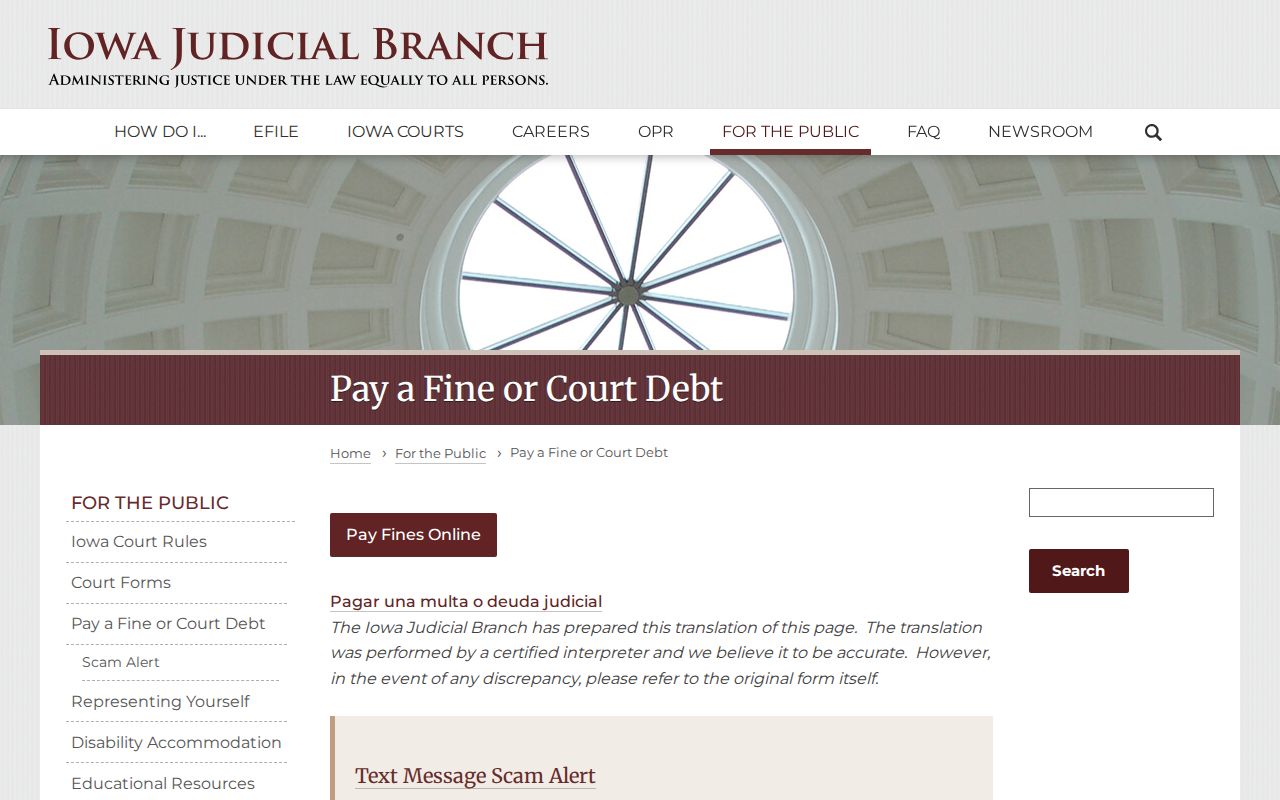
The page states that online payment is a guilty plea. It also says an appearance-required ticket must go to court. The portal pays an eligible court obligation; it does not promise automatic recall of a Clarke County traffic warrant. Confirm the next docket event with the Clerk.
Paying or Lifting a Traffic Warrant
A lawful response begins by matching the ticket to the right court case. Payment is only one possible path. A scheduled appearance, advice from counsel, or surrender may be required. No universal Clarke County traffic-warrant recall form or walk-in process was located.
- Confirm the citation, case ID, court date, and current public event.
- Ask whether payment is allowed or an appearance is required.
- Use only the official court payment route if eligible.
- Address any hearing, bond, or surrender requirement with counsel.
- Verify a later recall, quash, service, or disposition event.
Warning: A payment receipt does not prove a Clarke County traffic warrant was recalled; confirm the court order and current agency status.
Clarke Traffic Warrants and Parking
City parking violations are excluded from Iowa Courts Online and are paid to the city clerk. That makes a parking ticket different from a state or county traffic citation filed with the District Court. Do not send an Osceola parking matter to the sheriff or label it an arrest warrant without a specific court event.
| Record | Starting office | Public route |
|---|---|---|
| District Court traffic case | Clarke County Clerk | Iowa Courts Online, then clerk confirmation |
| City parking ticket | City clerk | City payment or records route |
| Sheriff-held service record | Clarke County Sheriff | Agency inquiry or focused records request |
Keep the citation number and any city code section. Those details let staff route the matter without guessing which office holds it.
That routing split matters when the only paper in hand is a payment notice. A city parking notice may never appear in Iowa Courts Online because the city clerk keeps that account. By contrast, a filed traffic citation can become a District Court case that is searchable by citation number. Ask which office owns the record before sending money, and do not infer a Clarke County traffic warrant from a city balance alone.
Traffic Warrant vs FTA and License Holds
A single missed traffic duty can produce more than one kind of record. The court warrant authorizes arrest. Failure to appear describes the missed court duty and may be a simple misdemeanor under section 805.5. A license or registration consequence stems from court debt administration and is not itself an arrest warrant.
| Mechanism | Trigger | Effect |
|---|---|---|
| Traffic arrest warrant | Qualifying willful FTA process | Authorizes arrest by a peace officer |
| FTA event | Missed required court appearance | Creates a docket event and possible added process |
| License or registration consequence | Reported delinquent court debt | Affects state administrative privileges |
Iowa DOT directs payment-plan and nonpayment questions back to the clerk. Resolve each record through the office that controls it. A court payment does not establish recall unless the docket or agency confirms that result.
Clarke Traffic Warrant Payment Scams
Scammers may claim that a traffic warrant requires immediate payment by phone, text, prepaid card, or bitcoin. The Iowa Judicial Branch says courts do not demand money through those methods or ask for a Social Security number in such a call. Do not click a payment link sent by an unknown person.
Find the Clerk's number on the official Clarke County court page. Match the citation to the public docket and use the secure Pay a Fine channel only when the case allows it. A real deadline can be checked without paying a caller. For an urgent safety issue, contact law enforcement through its published number.